Burnout Nutrition: What Women Need to Know About Cortisol, Protein, and Midlife Health

Burnout Nutrition: What Women Need to Know About Cortisol, Protein, and Midlife Health

If you've ever found yourself staring into the fridge at 6 p.m., too exhausted to figure out dinner, you're not alone.

One of the first things to go when we're burned out is nutrition. We skip meals, rely on caffeine, grab whatever is convenient, and tell ourselves we'll do better tomorrow.

The problem is that burnout and poor nutrition create a vicious cycle. The more stressed and depleted we become, the harder it is to make nourishing choices. And the harder it becomes to nourish ourselves, the worse our energy, mood, sleep, and resilience often get.

For women in their 40s, 50s, and beyond, there's another layer to consider: perimenopause and menopause.

This isn't about dieting. It isn't about cutting carbs, detoxes, or whatever wellness trend TikTok is selling this week.

It's about understanding what your body actually needs during periods of chronic stress.

Let's Talk About Cortisol

Cortisol is often called the "stress hormone," but that's only part of the story.

Cortisol helps regulate blood sugar, metabolism, inflammation, blood pressure, and your sleep-wake cycle. It's essential for life.

The issue isn't cortisol itself. The issue is chronic stress.

When we're under prolonged pressure - whether from work, caregiving, financial concerns, health challenges, or simply trying to keep all the plates spinning - our bodies spend more time in a heightened stress state.

Many women experiencing burnout report symptoms such as:

  • Fatigue despite sleeping

  • Increased cravings for sugar or highly processed foods

  • Difficulty concentrating

  • Poor recovery from exercise

  • Mood changes

  • Disrupted sleep

While cortisol is only one piece of a very complex puzzle, nutrition can help support overall health and resilience during stressful periods.

Why Protein Matters More Than You Think

One of the biggest nutritional mistakes I see among women in midlife is simply not eating enough protein.

As we age, our bodies naturally become less efficient at building and maintaining muscle. At the same time, declining estrogen levels during perimenopause and menopause can accelerate muscle loss.

Muscle isn't just about strength or appearance.

Muscle helps support:

  • Metabolism

  • Bone health

  • Blood sugar regulation

  • Physical function

  • Recovery and resilience

Protein also tends to be more satisfying than carbohydrates or fats alone, helping us feel fuller for longer and maintain steadier energy throughout the day.

Yet many women start the day with coffee and a muffin, have a salad for lunch, and wonder why they're ravenous by 4 p.m.

The answer isn't willpower.

Often, it's protein.

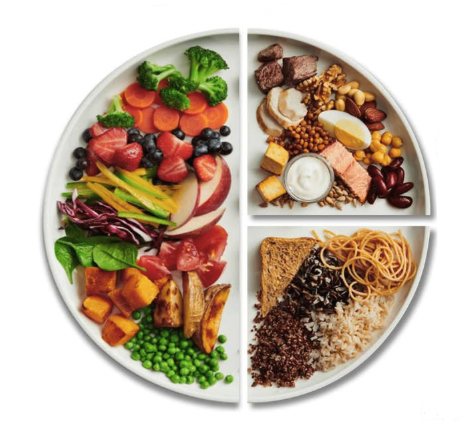
A breakfast containing protein - such as eggs, tofu, Greek yogurt, protein-rich smoothies, or other protein sources - can help support satiety and more stable energy levels throughout the day.

Perimenopause Changes the Rules

Many of the strategies that worked in our 20s and 30s stop working in our 40s and 50s.

Skipping meals.

Living on caffeine.

Undereating all day and overeating at night.

Exercising harder and eating less.

For many women, myself included, these approaches become increasingly difficult to sustain and can leave us feeling even more depleted.

During perimenopause, fluctuating hormones can affect sleep, appetite, body composition, mood, and recovery.

That doesn't mean you're failing.

It means your body is changing.

Supporting yourself through that transition often means focusing less on restriction and more on nourishment.

What Nourishment Actually Looks Like

The basics are not sexy.

They won't go viral.

But they work.

Think:

  • Eating regularly throughout the day

  • Including protein at every meal

  • Eating enough fibre from vegetables, fruit, legumes, nuts, and seeds

  • Staying hydrated

  • Limiting excessive alcohol

  • Prioritizing sleep whenever possible

  • Moving your body in ways that build strength and support recovery

Notice what's not on that list.

No detoxes.

No juice cleanses.

No cutting out entire food groups.

No "summer body" nonsense.

Just giving your body the resources it needs to handle life's demands.

Burnout Recovery Isn't Just Mental

When people think about burnout recovery, they often focus on rest, boundaries, and mindset.

Those things matter.

But recovery is also physical.

Your brain, hormones, muscles, bones, immune system, and nervous system all require fuel.

Nutrition won't solve burnout on its own.

But adequate nourishment can help create the foundation that makes healing possible.

Sometimes self-care isn't a bubble bath.

Sometimes it's eating lunch before 3 p.m.

And if you're a woman navigating burnout while also moving through perimenopause or menopause, that simple act of nourishment may be more important than you realize.

**Disclaimer: I'm a yoga teacher and retreat host, not a physician. The information in this article is intended for educational purposes only and is not medical advice. If you have questions about your health, nutrition, hormones, perimenopause, menopause, or burnout symptoms, please consult your doctor or a qualified healthcare professional.

Apparently Burnout Has a Very Diverse Client Base

When I first dreamed up this retreat, I assumed it would be a gathering of voice actors.

That made sense to me. I'm a voice actor. Most of the people I interact with daily are voice actors. My social media feed is approximately 87% microphones and people posting cryptic “Booked and Blessed” memes with “Under NDA… can’t share details…”

So naturally, I expected voice actors.

Two signed up.

Two.

Instead, a children's book author registered.

Then a psychologist.

A social worker.

A breathwork practitioner.

A film director.

And suddenly this retreat became far more interesting than I'd originally imagined.

Because while these women do wildly different work, they all seem to have arrived at the same conclusion:

Maybe it's time to get out of the group chat and into a yoga class.

It turns out burnout has a very diverse client base.

It doesn't particularly care whether you're directing films, helping clients, writing books, running a business, teaching yoga, or recording commercials in your closet while wearing your pj’s.

It simply shows up when life has been asking a lot of you for a very long time.

The Curious Thing About Being Competent

One of the downsides of being capable is that people keep giving you things.

Responsibilities.

Projects.

Opportunities.

Problems to solve.

And because you're capable, you keep handling them.

Until one day you realize you've become the CEO, marketing department, customer service representative, strategic planner, event coordinator, therapist, and emotional support human in your own life.

Congratulations.

You won!

The prize is exhaustion.

The women coming on this retreat know that feeling.

Not because they're failing.

Because they're succeeding!

They're showing up!

Doing meaningful work!

Building businesses!

Helping people!

Creating things!

Making things happen!

And somewhere along the way, many of us forget that energy is not an unlimited resource.

Why I'm Such a Fan of Retreats

I love retreats for the same reason I love putting my phone on airplane mode during a flight.

For a few glorious hours, nobody can ask me for anything.

A retreat creates that same feeling.

You step away from your regular environment and suddenly you're no longer reacting to life every five minutes.

Your nervous system stops behaving like it's working customer service during a Black Friday sale.

You sleep.

You breathe.

You move.

You eat food that someone else prepared.

You have conversations that aren't about deadlines, invoices, deliverables, algorithms, or whether you remembered to answer that email.

Something softens.

Something settles.

And remarkably, that's often when the good ideas show up.

Not because you're trying harder.

Because you've finally stopped trying so hard.

The Best Part Isn't Actually the Yoga

Don't tell the yoga.

But the thing I'm most excited about is the people.

There is something wonderful that happens when a group of smart, thoughtful women gather without an agenda beyond taking care of themselves for a few days.

Nobody is networking.

Nobody is pitching.

Nobody is trying to become a personal brand.

We're just humans being humans.

We'll practice yoga.

We'll meditate.

We'll walk through beautiful Old Quebec.

We'll enjoy delicious meals.

We'll rest.

We'll laugh!

And if history is any indication, we'll probably solve at least three of the world's problems over breakfast.

Or at minimum decide where to get excellent coffee and croissant. I mean, we ARE in Quebec…

A Weekend That Gives Something Back

But seriously, I don't believe a retreat changes your life.

I do believe it can change your week.

And sometimes changing your week changes everything else.

You come home sleeping better.

Thinking more clearly.

Feeling more like yourself.

You remember that life isn't something to survive until your next vacation.

It's something you're actually supposed to enjoy.

That's what this weekend is about.

Not escaping your life.

But returning to it with a fuller tank.

A clearer head.

A calmer nervous system.

And maybe a few new friends who understand exactly what it's like to be the person everyone else relies on.

The shared rooms have already sold out.

There are five private rooms remaining.

If you've been hearing a small voice saying, "You know what? I could really use a weekend away," I'd pay attention to that.

It sounds very wise.

July 10-12, 2026

Quebec City

Come spend a weekend with a fantastic group of women who have collectively decided that feeling good is a perfectly reasonable priority.

Frequently Asked Questions

Who is this retreat for?
This retreat is designed for self-employed women, entrepreneurs, creatives, healthcare professionals, helping professionals, and anyone experiencing stress or burnout.

Can beginners attend the yoga classes?
Yes. All yoga sessions are suitable for beginners and experienced practitioners alike.

Where is the retreat located?
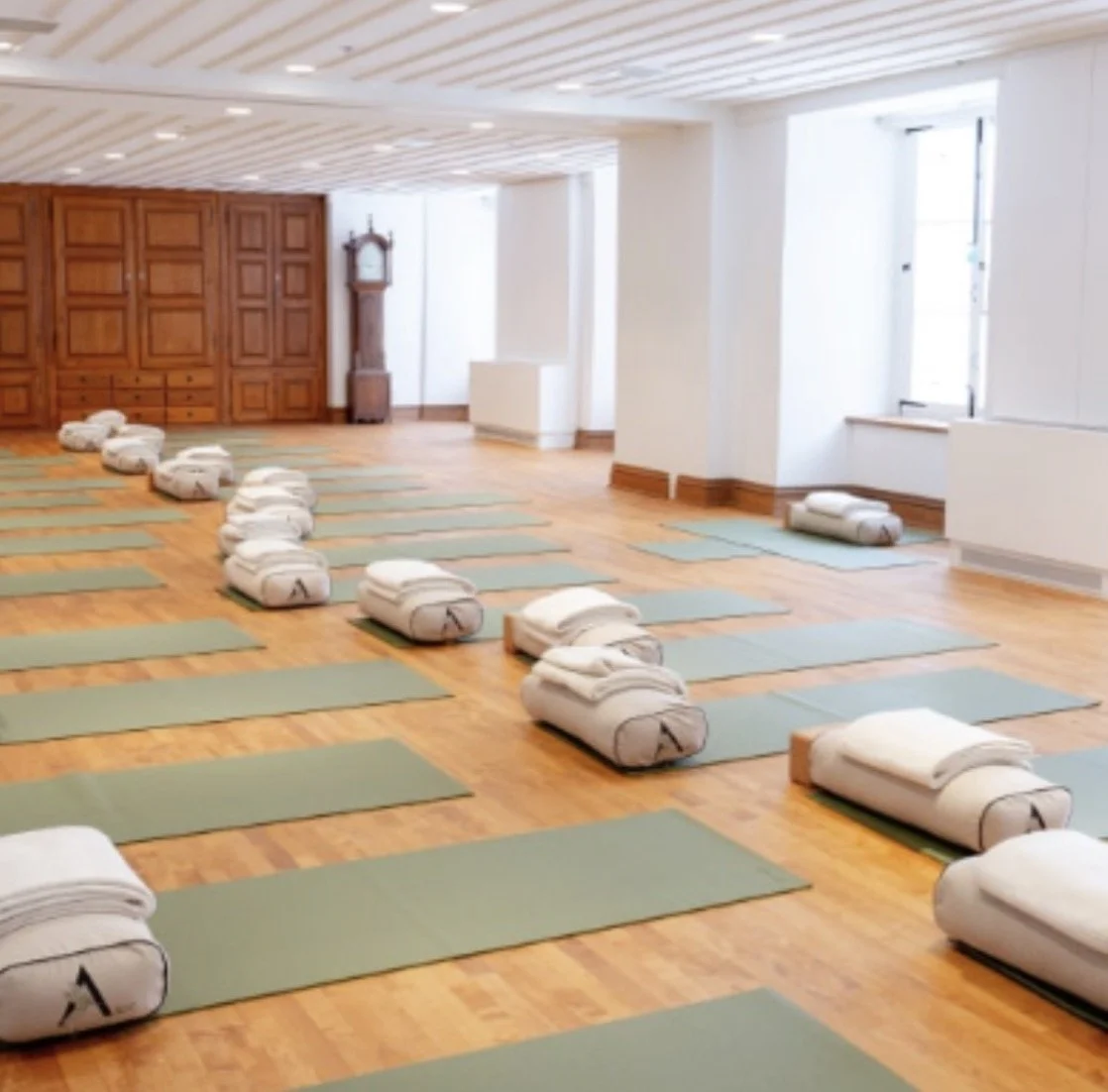
The retreat takes place at the Monastère des Augustines in Quebec City, Quebec.

What is included in the retreat?
Accommodation, all meals, yoga, yoga props/mats, meditation, community connection, and opportunities for rest and reflection are included.

How many spots remain?
The shared rooms are sold out. Five private rooms remain available.